Featured
Table of Contents
Business marketing success depends on five fundamental components that work together to drive results at scale. Lining up marketing with sales, product, and client success guarantees smooth execution.
Tracking impact throughout complex customer journeys validates investments and guides choices. Business marketing is more than promo: it makes the organization run effectively.
Technique is equated into actionable work, allowing companies to collaborate thousands of efforts without compromising creativity or speed. Conventional marketing concentrates on a single market or channel. Business marketing runs projects throughout service systems, manages resources at scale, and ensures every initiative aligns with the company's strategic objectives. Enterprise marketing depends on devoted roles such as marketing operations supervisors, brand governance leads, and marketing innovation experts: these positions are hardly ever discovered in standard groups, which usually work together informally.
Comparing Traditional PPC vs 2026 Growth Frameworks
Business marketing goes beyond coordination. It gets rid of friction, secures brand integrity, hones execution, and develops quantifiable impact leadership can connect straight to profits, effectiveness, and long-term growth.
That consistency develops acknowledgment and trust, strengthening premium positioning. Whether a customer takes part in New York or Singapore, the experience feels aligned, deliberate, and clearly on-brand. Central planning lowers duplication and directs budget toward high-impact initiatives. Groups using monday work management can imagine capability across departments, avoiding burnout, lessening idle time, and making sure every financial investment supports strategic priorities.
Bigger datasets make it possible for much deeper analytics and smarter personalization, providing enterprise organizations insight smaller rivals struggle to reproduce. From first interaction through post-purchase engagement, customers experience clarity and continuity, increasing complete satisfaction and lifetime worth.
How AI-Driven Search Changes [:service]
Linked workflows lower silos in between marketing, sales, product, and customer success. Shared objectives and transparent execution make sure launches and campaigns get coordinated assistance throughout every customer-facing group. Unified reporting provides full presence into efficiency. Precise attribution makes it possible for leaders to double down on what works, refine what does not, and make choices grounded in information instead of assumption.
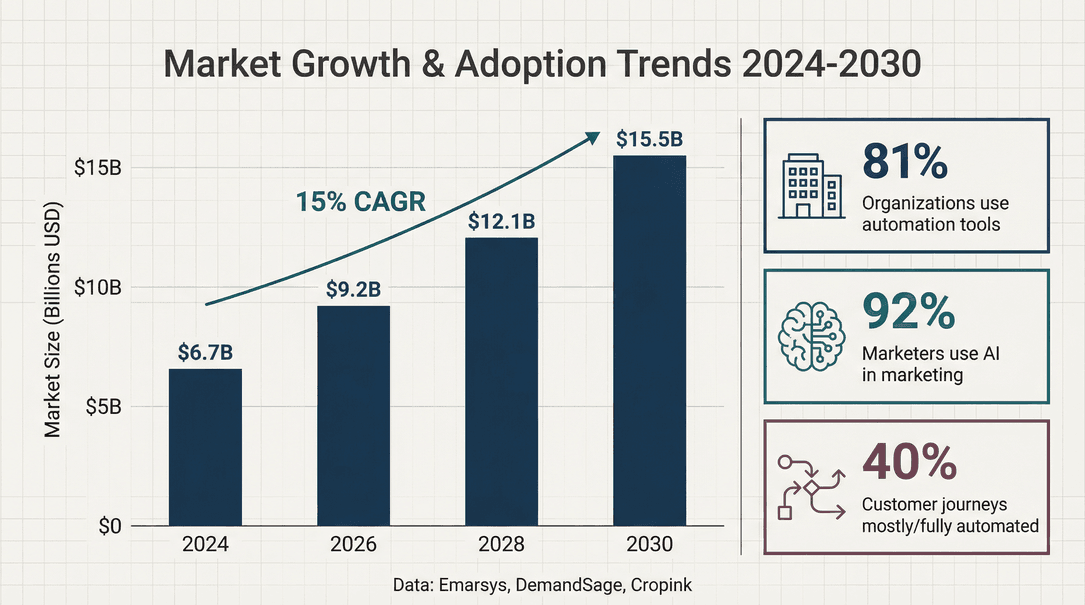
The techniques listed below aid companies move from spread efforts to collaborated execution that drives quantifiable effect. Developing a governance framework preserves consistency while allowing groups to adapt when needed. Efficient governance consists of: Clear requirements for voice, visual identity, and messaging. Single source of fact for authorized products. Streamlined processes that maintain quality without slowing execution.
Technology needs to scale with the company and incorporate seamlessly with existing systems. Core elements include marketing automation, consumer information platforms, and cooperation systems that work together. Modern platforms like monday work management support combination through API connections and pre-built integrations, breaking down data silos. Standardized processes for project development, content development, and lead management keep departments running effectively.
Groups can embed these procedures utilizing managed templates that guarantee compliance automatically. Marketing choices ought to be based on analysis rather than intuition. Organizing teams into self-governing teams enables large organizations to move with startup speed.
Regular efficiency reviews, structured testing, and knowledge-sharing guarantee insights from one market can be used worldwide. Feedback loops enable ongoing improvement of both technique and execution. Innovation must scale with the organization and incorporate effortlessly with existing systems. Core components consist of marketing automation, client data platforms, and cooperation systems that interact.
Will Generative Optimization Disrupt the Business Strategy?
As companies grow, intricacy grows with them. Without structure, alignment slips and execution slows. A clear, scalable structure keeps groups collaborated, strategy focused, and performance steady as business expands. Evaluate your existing marketing abilities, technology facilities, and organizational structure. Recognize spaces in marketing maturity, process standardization, and system integration.
Align marketing efforts with business objectives through clear goals and measurable key performance signs. Track both marketing performance: lead velocity, conversion rates, and engagement; and company impact: earnings contribution, market share, and customer growth. These metrics act as a roadmap for prioritizing initiatives and designating resources effectively. Establish decision-making processes that stabilize speed with stakeholder input.
: Does it meet enterprise compliance requirements?: Will teams adopt it consistently throughout workflows? Teams typically begin with a work management platform like monday work management to collaborate efforts before adding specialized marketing systems.
Handled design templates help groups standardize hundreds of jobs and upgrade them in genuine time across departments. Usage regular performance evaluations and stakeholder feedback to determine chances for improvement.
When those foundations are in location, teams carry out regularly, stay lined up throughout regions, and keep quality without slowing down. Vital abilities consist of:: Handling millions of consumer profiles.
Essential Marketing Pillars for [:service] Excellence
: Targeting based on habits, demographics, and engagement. Automation must incorporate with your wider innovation stack to prevent developing silos. Analytics platforms consolidate data from several sources for a total performance view. These solutions supply attribution modeling, predictive analytics, and real-time reporting, helping leaders make data-driven decisions that extend beyond private channels.
Smart platforms like monday work management connect dispersed teams and make sure positioning on top priorities. AI boosts marketing operations across platforms, offering:: Forecasting client behavior and market trends.: Improving messaging and creative automatically.: Determining high-value audience groups.
AI allows capabilities that human teams alone can not handle throughout numerous concurrent initiatives. AI examines historic information to optimize audience division, channel mix, and budget allocation before projects launch. Enterprise online marketers shift from reactive to proactive methods, preparing for customer behavior and market patterns with precision that was formerly unattainable.
This automated personalization increases operational efficiency while boosting the customer experience, ensuring the best message reaches the right audience at the best time. AI supports enterprise groups in identifying and mitigating risks across international portfolios.

Table of Contents
Latest Posts
Unified Omnichannel Blueprints for Success
More
Latest Posts
Unified Omnichannel Blueprints for Success